






Table of Contents
- Executive Summary
- How AI Fits Into Modern Medicine
- AI in Diagnostics and Medical Imaging
- Large Language Models in Clinical Workflows
- AI in Drug Discovery and Computational Biology
- Clinical Outcomes and Regulatory Progress
- Bias, Ethics, and Patient Safety
- Adoption Challenges and Technical Limitations
- Industry Landscape and Investment Trends
- Implementation Playbook for Healthcare Leaders
- Future Outlook: The Next 3–7 Years
- Conclusion
1. Executive Summary
Artificial Intelligence (AI) has transitioned from experimental research to a practical and increasingly indispensable component of modern medical science. From radiology and pathology to drug discovery and hospital operations, AI-driven systems are improving diagnostic accuracy, reducing clinician workload, and accelerating scientific discovery. Regulatory bodies such as the U.S. FDA have begun formally approving and qualifying AI-powered medical tools, signaling institutional confidence in their clinical value.
However, alongside these advances come challenges related to bias, data quality, transparency, and governance. This article examines where AI is delivering measurable results today, how it is reshaping medicine at scale, and what healthcare leaders must do to adopt it responsibly.
2. How AI Fits Into Modern Medicine
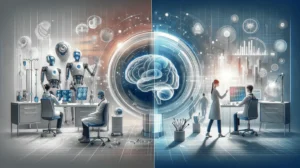
AI applications in healthcare can be broadly grouped into four functional categories. Understanding this framework helps decision-makers evaluate where AI delivers the highest impact and lowest risk.

Diagnostic and Perception Models
These include deep learning systems that interpret medical images, pathology slides, electrocardiograms, and retinal scans. This category is the most mature, with multiple FDA-authorized solutions already deployed in clinical settings.
Clinical Decision Support and Workflow Automation
Large Language Models (LLMs) and rule-based systems assist clinicians with documentation, evidence synthesis, and patient communication. These tools enhance efficiency but require strict oversight to avoid errors in clinical records.
Drug Discovery and Translational Research
AI-driven platforms analyze biological data, predict protein structures, generate novel molecular compounds, and identify new drug targets—dramatically compressing discovery timelines.
Population Health and Predictive Analytics
Predictive models help healthcare systems anticipate readmissions, detect sepsis earlier, optimize staffing, and allocate resources more effectively across populations.
3. AI in Diagnostics and Medical Imaging
Medical imaging is where AI has demonstrated its most consistent and measurable success. Deep learning algorithms now match or exceed specialist-level performance in detecting conditions such as lung cancer nodules, diabetic retinopathy, stroke, and coronary artery disease.
Radiology
AI-powered triage systems can flag high-risk scans—such as suspected intracranial hemorrhages—allowing radiologists to prioritize urgent cases. Studies show significant reductions in time-to-diagnosis and improved workflow efficiency.
Pathology
In digital pathology, AI models identify tumor boundaries, quantify biomarkers, and reduce inter-observer variability. This consistency is critical for cancer diagnosis and clinical trial enrollment.
Ophthalmology and Preventive Screening
AI-based retinal screening tools for diabetic retinopathy are widely cited success stories. These systems expand screening access, especially in primary care and underserved regions, where specialist availability is limited.
4. Large Language Models in Clinical Workflows
LLMs are redefining how clinicians interact with medical data. Unlike traditional AI models focused on perception, LLMs specialize in understanding and generating language.
Key Use Cases
- Automated clinical documentation and discharge summaries
- Summarizing medical guidelines and research papers
- Patient communication and education materials
- Administrative triage and internal knowledge support
Benefits and Risks
LLMs can significantly reduce documentation burden and improve consistency. However, risks include hallucinated information, incorrect citations, and legal exposure if outputs are blindly inserted into medical records. Leading medical journals stress the importance of human-in-the-loop validation.
5. AI in Drug Discovery and Computational Biology
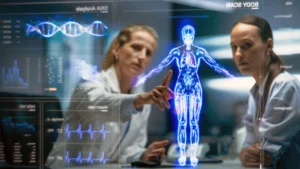
Drug discovery is undergoing a computational renaissance. AI models analyze genomic, proteomic, and chemical data to identify promising drug candidates far faster than traditional methods.

Protein Structure Prediction
Breakthrough systems like AlphaFold have solved decades-old challenges in protein folding, enabling faster target validation and mechanistic understanding.
Generative Chemistry
Generative AI platforms can design novel molecules optimized for efficacy, toxicity, and manufacturability. Several AI-designed compounds have already entered early-stage clinical trials.
Impact on Patients
While AI cannot eliminate the need for clinical trials, it can reduce attrition rates and bring therapies—especially for rare diseases—to patients more quickly.
6. Clinical Outcomes and Regulatory Progress
Regulatory acceptance is a key milestone for medical AI. The FDA has established pathways for Software as a Medical Device (SaMD) and maintains a growing list of authorized AI-enabled tools.
In late 2025, the FDA qualified its first AI-based tool (AIM-NASH) to support liver disease drug development, signaling openness to AI as a regulatory-grade evidence generator.
7. Bias, Ethics, and Patient Safety
Bias remains one of the most serious risks in healthcare AI. Models trained on non-representative datasets can underperform for certain demographic groups, potentially worsening health disparities.
Best Practices
- Demographic performance reporting
- Bias audits and fairness testing
- Transparent dataset documentation
- Continuous post-deployment monitoring
8. Adoption Challenges and Technical Limitations
Despite impressive performance, AI adoption is often slowed by interoperability issues, data silos, clinician skepticism, and unclear reimbursement models.
Successful implementations invest as much in change management and governance as they do in model accuracy.
9. Industry Landscape and Investment Trends
Investment in medical AI continues to grow, particularly in AI-driven drug discovery and imaging diagnostics. Major technology companies, biotech firms, and healthcare providers are forming strategic partnerships to scale innovation.
10. Implementation Playbook for Healthcare Leaders
- Start with high-impact, low-risk use cases
- Demand external validation and regulatory clarity
- Establish multidisciplinary governance committees
- Monitor equity and performance continuously
11. Future Outlook: The Next 3–7 Years
Over the next decade, AI will become embedded across diagnostics, clinical trials, and hospital operations. The most successful systems will combine explainability, regulatory compliance, and ethical design.
AI in Medical Science: Key Facts and Evidence
- Artificial intelligence is actively used in healthcare for medical imaging, diagnostics, clinical documentation, drug discovery, and predictive analytics.
- AI systems can match or exceed human-level accuracy in specific tasks such as radiology image analysis and diabetic retinopathy screening.
- The U.S. Food and Drug Administration (FDA) has authorized and qualified multiple AI-enabled medical tools under its Software as a Medical Device framework.
- AI-driven drug discovery platforms can significantly reduce early-stage development timelines by analyzing biological data and generating novel molecular compounds.
- AI in medicine is designed to augment clinicians, not replace them, with human oversight remaining essential for safety and ethical decision-making.
12. Conclusion
AI is not replacing clinicians—it is augmenting them. When deployed responsibly, AI can improve accuracy, efficiency, and access to care. The future of medical science will be defined by how well human expertise and intelligent systems work together.
Frequently Asked Questions About AI in Medical Science
What is artificial intelligence in medical science?
Artificial intelligence in medical science refers to the application of machine learning, deep learning, and large language models to analyze medical data, support clinical decisions, automate workflows, and accelerate biomedical research. AI is widely used in diagnostics, medical imaging, drug discovery, and personalized medicine.
How is AI currently used in healthcare?
AI is currently used in healthcare for medical imaging analysis, clinical documentation automation, predictive analytics, virtual health assistants, and pharmaceutical research. Many hospitals and clinics already rely on AI tools to improve accuracy, speed, and operational efficiency.
Is AI more accurate than doctors in medical diagnosis?
AI can match or exceed human-level accuracy in specific diagnostic tasks such as radiology image analysis and retinal disease screening. However, AI does not replace doctors. Clinical decisions require human expertise, contextual judgment, and ethical responsibility.
What are the benefits of AI in medical research and drug discovery?
AI helps accelerate medical research and drug discovery by analyzing massive biological datasets, predicting protein structures, identifying promising drug targets, and generating new molecular compounds. This can significantly reduce research timelines and development costs.
Is AI in healthcare approved by regulators like the FDA?
Yes. The U.S. Food and Drug Administration (FDA) has authorized multiple AI-enabled medical devices under its Software as a Medical Device framework. The FDA has also qualified AI tools for use in clinical trials when they demonstrate safety, transparency, and clinical effectiveness.
What are the risks of using AI in medicine?
Risks include biased training data, lack of transparency, data privacy issues, model performance drift, and incorrect outputs from generative AI systems. Strong governance, bias monitoring, and human oversight are critical to safe deployment.
Can AI replace doctors and healthcare professionals?
No. AI is designed to augment healthcare professionals, not replace them. Human clinicians remain essential for diagnosis, patient communication, ethical judgment, and accountability.
How will AI impact healthcare in the next five years?
Over the next five years, AI will become deeply integrated into diagnostics, clinical workflows, and medical research. Expect increased regulatory approvals, faster drug development, improved personalized care, and stronger ethical and governance frameworks.


