






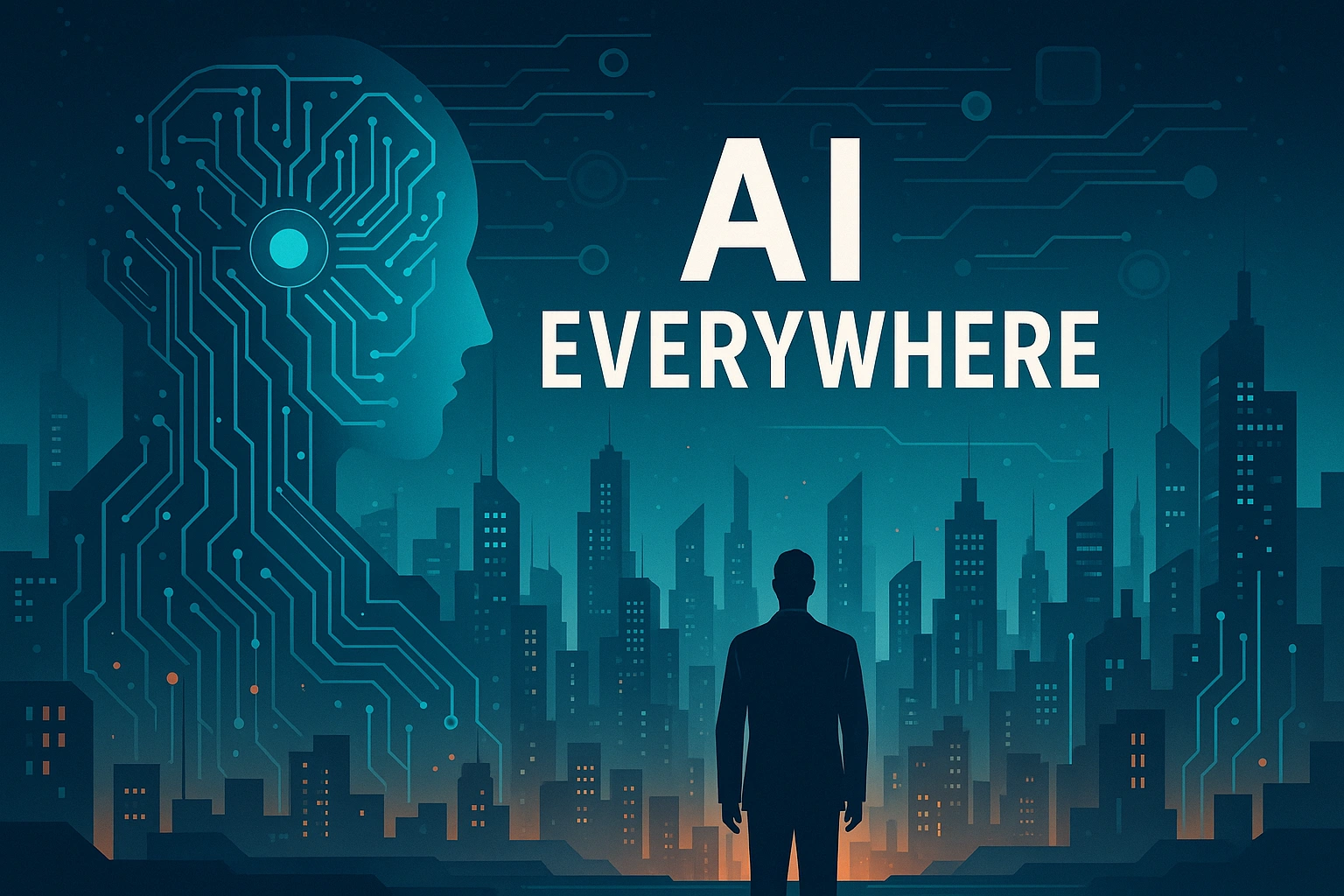
It has become the central force shaping how organizations operate, innovate, and compete.
Recent insights from Deloitte’s Tech Trends research and Business Insider’s CIO surveys reveal a clear shift:
AI is moving from pilot projects to foundational infrastructure, with budgets, talent strategies, and operating models being redesigned around it. According to a Business Insider survey of more than 100 IT leaders, nearly 90% of companies plan to increase AI spending in 2026, with most organizations now allocating dedicated AI budgets rather than bundling them into general IT costs.
This marks a turning point where AI is treated not as a tool, but as a long-term business capability.
From Experimentation to Strategic Investment
For years, AI initiatives lived in innovation labs and proof-of-concept environments. In 2025, that experimentation phase is ending. Organizations are now funding AI initiatives at scale, embedding them directly into revenue-generating systems and operational workflows.


The Business Insider survey highlights that generative AI has become the top software investment priority,
outpacing traditional areas such as cybersecurity and infrastructure upgrades. This shift reflects growing confidence that AI can deliver measurable outcomes, including productivity gains, cost optimization, and improved customer experience.
Real-world applications extend far beyond chatbots. Enterprises are using large language models to automate customer support resolution, generate marketing drafts at scale, and assist sales teams with predictive insights,
and help developers accelerate software delivery.
More than half of the surveyed companies already have generative AI systems in production,
With many others planning deployment within the next six months.
Deloitte Tech Trends: The Forces Shaping Modern Enterprises
Deloitte’s annual Tech Trends report frames AI as a foundational layer that cuts across every aspect of modern technology.
Rather than focusing on isolated innovations, the report identifies several interconnected trends that together define how enterprises will evolve.
Spatial Computing and Immersive Interfaces
Spatial computing, which blends augmented reality, virtual reality, and 3D interfaces, is moving from experimentation to practical enterprise use. Organizations are exploring immersive tools to enhance training, maintenance, design collaboration, and data visualization.


For example, manufacturing teams can use augmented reality overlays to guide complex repairs,
while architects and designers can collaborate in shared virtual environments.
Deloitte notes that spatial computing is no longer just a novelty; It is becoming a productivity multiplier and, in some cases, a new revenue channel.
Smaller AI Models with Specialized Impact
While large language models dominate headlines, enterprises are increasingly investing in smaller, task-specific AI models. These models are cheaper to run, easier to secure, and more predictable in regulated environments.
Specialized models are being deployed for fraud detection, medical coding, customer segmentation, and internal knowledge retrieval. This trend underscores a key insight: effectiveness often comes from precision rather than scale.
AI-Driven Hardware and Edge Computing
AI’s rapid growth is reshaping the hardware landscape. Organizations are adopting specialized chips and edge computing architectures to handle real-time AI inference closer to where data is generated.
This reduces latency, improves privacy, and lowers long-term cloud costs. As a result, AI hardware decisions are now strategic considerations, not just infrastructure upgrades.
The Business of IT Is Being Rewritten
AI is fundamentally changing the role of IT teams. Rather than focusing solely on system maintenance and support, IT departments are becoming orchestrators of intelligent systems and human–AI collaboration.
Deloitte describes this shift as moving from “thin IT” to technology as a strategic engine. This requires new operating models, continuous upskilling, and closer alignment between technology and business leadership.
Roles such as AI product manager, prompt engineer, and data governance lead are becoming mainstream,
while traditional roles are being augmented with AI-driven tools.
Cybersecurity, Trust, and Governance in an AI-First World
As AI systems proliferate, they also introduce new attack surfaces and governance challenges.
Traditional security models are insufficient for protecting AI pipelines, training data, and inference systems.


Enterprises are investing in AI-specific security measures, including model monitoring, data lineage tracking,
and robust access controls.
At the same time, concerns around bias, transparency, and regulatory compliance are driving the need for clear AI governance frameworks.
Trust has become a competitive differentiator. Organizations that deploy AI responsibly and transparently are more likely to gain customer confidence and regulatory approval.
Talent, Skills, and the AI Workforce
The surge in AI investment has triggered intense competition for skilled talent.
Companies are offering significant compensation premiums to attract professionals with AI and machine learning expertise.
However, the demand is not limited to engineers. Product managers, marketers, analysts, and executives are increasingly expected to understand AI capabilities and limitations. This is driving growth in internal training programs, AI literacy initiatives, and partnerships with educational platforms.
The future workforce will not be divided into “technical” and “non-technical” roles, but rather into those who can effectively work with AI and those who cannot.
Looking Ahead: AI Maturity and Long-Term Value
Despite the rapid pace of adoption, many organizations still struggle to measure AI return on investment.
Integration complexity, data quality issues, and cultural resistance remain common challenges.


Yet executive confidence remains high. Surveys show that a majority of CEOs expect AI investments to deliver meaningful returns within the next three years. This optimism reflects a broader belief that AI is essential for long-term competitiveness.
The organizations that succeed will be those that treat AI not as a standalone initiative,
but as a core capability woven into strategy, operations, and culture.
Conclusion
The technology landscape of 2025 is defined by one unmistakable reality:
AI has become foundational. Budgets, talent strategies, infrastructure decisions, and governance models are all being reshaped around intelligent systems.
Insights from Deloitte and Business Insider point to a future where AI is as ubiquitous and indispensable as cloud computing or the internet itself. Organizations that invest thoughtfully, build trust, and align AI with real business goals will lead the next era of digital transformation.


