




AI Doesn’t Replace Designers — It Amplifies Them
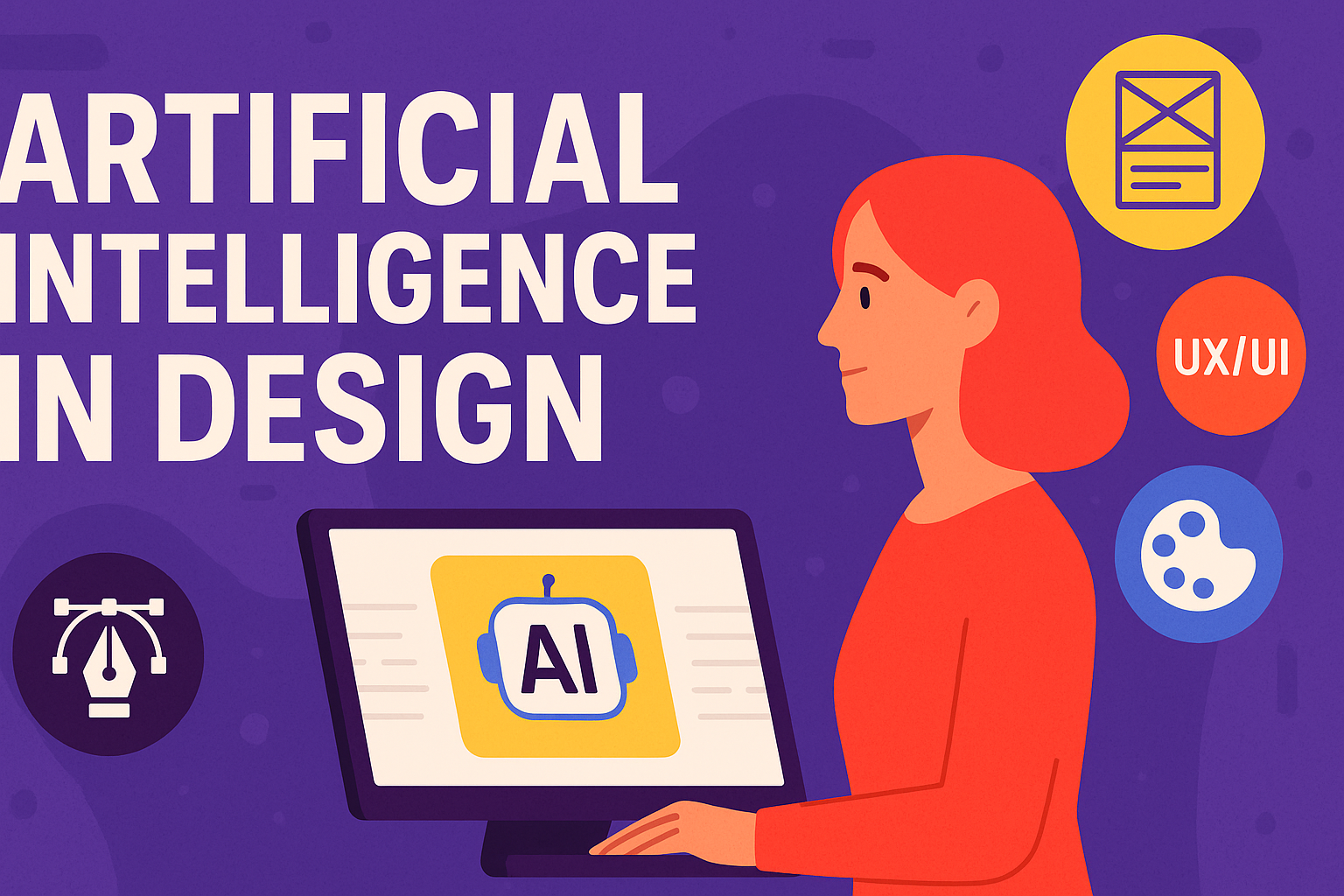
The most common misconception is that AI will replace creative professionals. In reality, AI elevates designers into strategic problem-solvers. Designers still lead on cultural nuance, emotional storytelling, and brand strategy—areas where human judgment is essential. AI handles scale, speed, and repetitive tasks, freeing designers to focus on high-value creative work.
What Designers Do Better Than AI
- Interpret cultural nuance and tone
- Understand and craft emotional narratives
- Synthesize long-term brand strategy
- Make complex judgment calls in UX
What AI Excels At
- Generating hundreds of design variations in minutes
- Maintaining pixel-perfect consistency across assets
- Analyzing large datasets to guide design decisions
- Automating production tasks and resizing for platforms
How AI Transforms the Design Workflow (Step-by-Step)
1. Ideation — From Blank Canvas to Instant Concepts
AI tools now generate mood boards, style references, and complete concept variations from simple prompts. For example, a clothing brand can request “a futuristic sportswear photoshoot in neon Tokyo lighting” and get dozens of concept images, composition suggestions, and color palettes instantly.
2. Visual Design & Production — Faster, Cleaner, Smarter
Routine tasks like background removal, retouching, color grading, and resizing can be automated. Marketing teams and non-designers can produce production-quality visuals using tools like Photoshop AI, Canva Magic Studio, and Adobe Firefly, saving up to 40–60% of production time in many cases.
3. UX/UI — Smarter Prototyping and Behavior Prediction
AI can generate wireframes from text prompts, suggest layout changes based on proven UX patterns, and predict user friction points using simulated heatmaps. Fintech startups, for example, use AI to identify onboarding drop-off points before launch—allowing teams to iterate faster and reduce churn.
4. Branding & Identity — Intelligence + Creativity at Scale
AI creates logo variations, recommends color psychology combinations, proposes typography systems, and even compiles brand style guides. A local coffee shop can generate a full brand kit—logos, color palettes, social templates—within hours instead of weeks.
5. Marketing & Advertising — Personalized Creativity at Scale
AI powers large-scale ad variations, personalized creatives, and automated video edits. Marketers can test dozens of thumbnails, headlines, and visuals in parallel. Meta and other platforms report that AI-based personalization can boost ROAS and engagement significantly—sometimes by 40–60%.
Tools Powering AI Design in 2025
| Category | Tools | What They Do |
|---|---|---|
| Image generation | Midjourney, DALL·E 3, Ideogram | Concepts, product shots, mood boards |
| Editing & manipulation | Photoshop AI, Canva Magic Studio, Firefly | Retouching, automatic layouts, color fixes |
| UI/UX | Figma AI, Uizard, Framer AI | Text-to-wireframe, prototyping, layout suggestions |
| Branding | Looka, Brandmark | Logo kits, color & typography systems |
| Video | Runway ML, Pika Labs, Descript | Script-to-video, edits, motion graphics |
| 3D/AR | Spline AI, Blender AI | 3D assets, product renders, virtual environments |
Business Advantages of AI-Driven Design
Companies adopt AI in design for clear business reasons: faster time-to-market, consistent branding, lower production costs, and higher conversion rates. Small teams can now produce agency-quality work, while large enterprises can maintain design consistency across thousands of assets.
Faster Time-to-Market
Speed is a competitive advantage. AI reduces the time it takes to go from concept to live campaign—sometimes shrinking timelines from weeks to days.
Improved Consistency
AI enforces brand rules and templates automatically, ensuring brand trust across channels.
Data-Driven Creative
Design decisions informed by user behavior and analytics lead to measurable uplift in conversion and retention.
Challenges and Ethical Concerns
AI in design is powerful but imperfect. Watch out for:
- Generic output: Over-reliance can produce trend-driven, generic visuals.
- Copyright risks: AI sometimes mirrors existing styles; always check licenses and originality.
- Bias: Models trained on non-diverse data may produce stereotyped imagery.
- Skill gap: Designers must learn prompt engineering and new workflows to stay relevant.
The Near Future: Where AI + Design Are Headed
Over the next 3–5 years, expect:
- Real-time AI co-pilots that suggest UX improvements as you design.
- Fully automated pipelines: describe → design → prototype → publish.
- Hyper-personalized visual experiences tailored to individual users.
Practical Tips for Designers and Businesses
- Start with goals: Use AI to achieve business metrics (conversion, retention), not just aesthetics.
- Invest in skill building: Train designers on prompt engineering and AI tools.
- Test thoroughly: A/B test AI-generated creatives and iterate based on performance data.
- Keep humans in the loop: Always refine AI outputs for originality and brand fit.
Conclusion
AI is not the end of design—it’s the evolution of it. Designers who embrace AI will be more creative, productive, and valuable. Businesses that adopt AI-driven design will reduce costs, accelerate experiments, and improve conversions. The winning formula is clear: human creativity + machine scale = better design.


