


Why Personal Branding Feels Wrong to Smart People
For many capable professionals, the phrase “personal branding” triggers discomfort. It feels artificial, self-centered, or performative. The loudest voices online often reinforce this reaction—carefully curated opinions, recycled hot takes, and relentless posting that prioritizes visibility over substance.
High performers tend to believe that good work should speak for itself. They focus on execution, outcomes, and reliability. Unfortunately, modern career systems do not reward invisibility. Work that is not seen, explained, or contextualized often gets undervalued, no matter how impactful it is.
The tension most professionals feel is not about branding itself. It is about the type of branding they see modeled. When branding is framed as constant self-promotion, it clashes with integrity. But when branding is reframed as professional signaling, it becomes essential rather than optional.
What Personal Branding Actually Is (and Isn’t)
Personal branding is not about being famous, posting daily, or manufacturing opinions. It is not about turning your career into content or competing for attention with influencers. At its core, personal branding is simply the process by which others understand what you are good at and whether they trust you to do it.
Every professional already has a personal brand, whether they acknowledge it or not. It exists in the minds of managers, peers, recruiters, and collaborators. The only question is whether that brand is intentional or accidental.
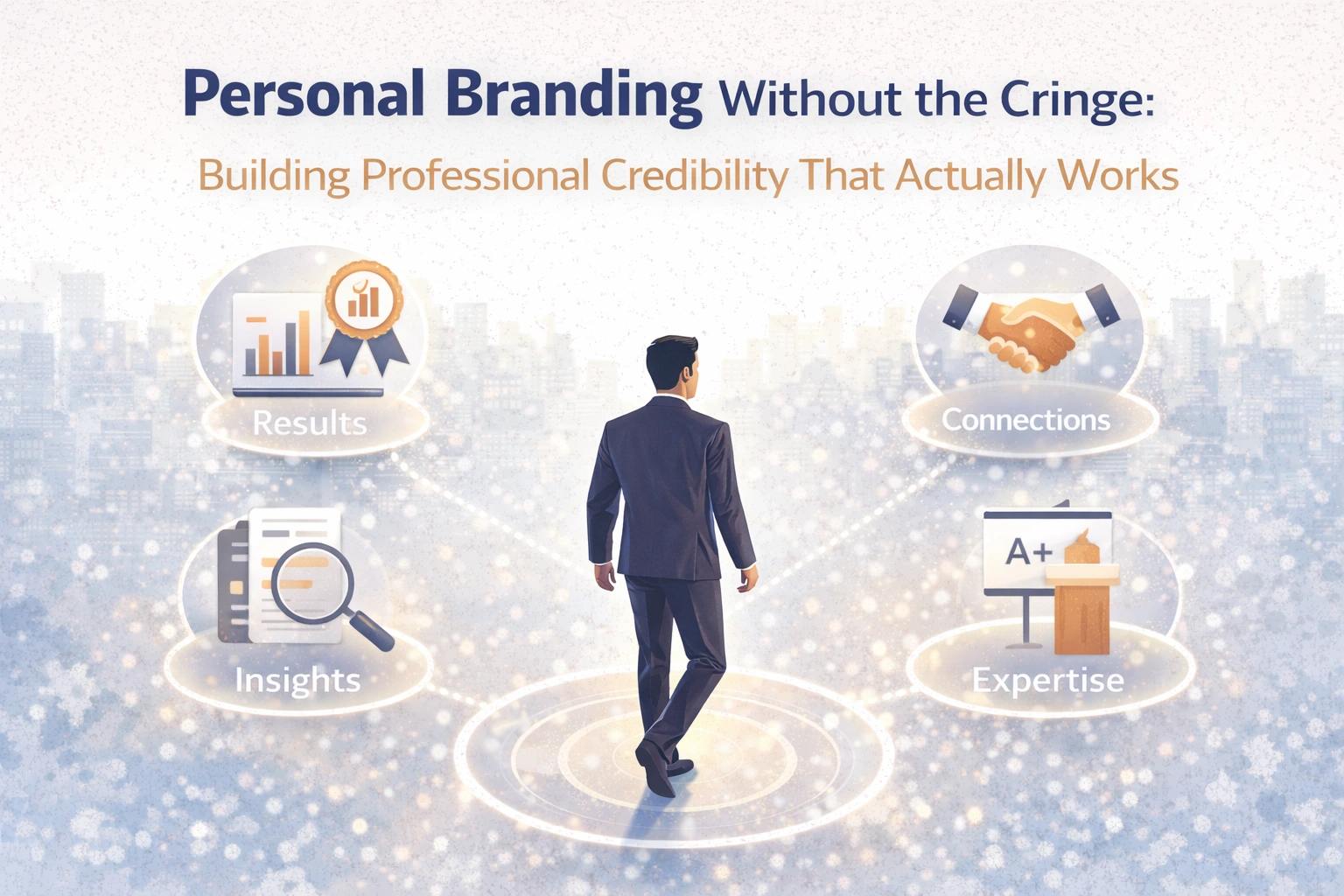
Effective personal branding does not add noise. It reduces ambiguity. It answers three questions clearly: What problems do you solve? How do you think about those problems? Why should someone trust your judgment?
Credibility vs Popularity: The Signal Most People Miss
Popularity is visible. Credibility is felt. Social platforms reward reach, engagement, and frequency, but hiring decisions, promotions, and referrals are driven by trust. These systems operate on different incentives.
A professional with a small but relevant audience often outperforms a popular generalist when real opportunities arise. Decision-makers look for evidence of judgment, consistency, and applied experience, not viral reach.
This explains why many people with modest online presence consistently land strong roles, consulting work, or leadership opportunities. Their credibility is built through proof and context, not volume.
The Three Signals That Create Real Professional Trust
1. Proof of Work
Proof of work is the most powerful signal. Case studies, project breakdowns, before-and-after results, and documented decisions show how you operate in real situations. They demonstrate competence without needing persuasion.
Professionals who share proof of work reduce the risk for anyone considering hiring or working with them. The audience does not have to imagine capability—it is visible.
2. Judgment and Clarity
Judgment is revealed through how you explain trade-offs, constraints, and failures. Anyone can share outcomes. Fewer people can articulate why one path was chosen over another.
Clear thinkers attract trust. They simplify complexity without oversimplifying reality. Over time, this clarity becomes a defining element of their professional identity.
3. Consistency Over Time
Trust compounds through consistency. Sporadic posting or sudden bursts of visibility rarely move the needle. Small, steady signals over time build familiarity and confidence.
This is why quiet professionals who publish occasionally but thoughtfully often outperform louder peers in long-term career outcomes.
Low-Effort, High-Integrity Branding Strategies
The most sustainable branding strategies fit naturally into existing work. Writing a short reflection after completing a project, documenting a decision process, or summarizing lessons learned from a failure requires little extra effort.
Teaching is another high-leverage approach. Explaining something you recently learned helps others while reinforcing your own understanding. It positions you as thoughtful without requiring expertise in theater.
Sharing outcomes instead of effort is critical. “Here’s what worked and why” signals maturity. “Here’s how hard I worked” signals insecurity.
Where to Show Up—and Where Not To
Not every platform deserves your energy. LinkedIn works well for professional narratives, career lessons, and case studies. Personal blogs allow deeper thinking and long-form proof. Internal company platforms are often overlooked but extremely powerful for visibility.
The goal is not omnipresence. It is relevant. Showing up consistently in one or two places is more effective than spreading attention thin across many channels.
Stories of Professionals Who Did This Quietly
A senior engineer once began writing brief internal memos explaining architectural decisions after major releases. These were not polished blog posts, just clear explanations. Within a year, leadership began involving them earlier in planning discussions, and their role evolved without a title change.
A marketing manager documented experiments that failed and what they learned. When budgets tightened, leadership trusted their judgment to lead strategy, not because of visibility alone, but because their thinking was transparent.
In both cases, credibility—not promotion or self-promotion—created opportunity.
The Personal Brand Audit
Ask yourself a simple question: if someone outside my team searched for my work, what would they find? Would they understand my strengths? Would they see proof or just titles?
Gaps are normal. Personal branding is not about reinvention. It is about alignment between reality and perception.
The 30–60–90 Day Visibility Plan
In the first 30 days, document one meaningful project or decision. In the next 60 days, share one lesson learned publicly or internally. By 90 days, connect with people who engage thoughtfully with your work.
This pace is realistic, sustainable, and effective. Visibility grows through rhythm, not intensity.
Why Quiet Signals Beat Loud Self-Promotion
The most effective personal brands are built quietly, deliberately, and honestly. They prioritize clarity over attention and trust over reach.
In a market overwhelmed by noise, professionals who signal value with restraint stand out. Not because they shout louder, but because they make it easier to trust them.
