







Why Educational Content Outperforms Sales Pages on Meta Ads
Many advertisers approach Meta Ads with a straightforward goal: sell something as quickly as possible. The logic is understandable. Ads cost money, and direct sales feel efficient. But in today’s Meta Ads environment, this approach often works against how the system actually evaluates performance.
Educational content, while slower on the surface, consistently outperforms hard sales messaging over time. Not because it is clever, but because it aligns more naturally with how people behave on social platforms and how Meta’s algorithm learns from that behavior.
The Social Context Matters More Than the Offer
Facebook and Instagram are not marketplaces first. They are attention environments. People open these apps to scroll, explore, and learn casually, not to make immediate purchasing decisions.
Educational content fits that mindset. It invites curiosity instead of demanding action. When users feel no pressure, they engage more naturally, and that engagement sends strong signals back to the system.
Sales pages often interrupt. Educational content integrates.
Why Engagement Signals Favor Education
Meta’s algorithm does not optimize for persuasion. It optimizes for response. Time spent, scroll depth, video completion, saves, and comments are all signals that indicate relevance.
Educational content tends to perform well on these metrics because it gives users a reason to stay. A guide, explanation, or insight creates value before asking for anything in return.
This is one reason Meta Ads now prioritize signals over targeting, rewarding content that earns attention rather than demands it.
Trust Is Built Before the Click
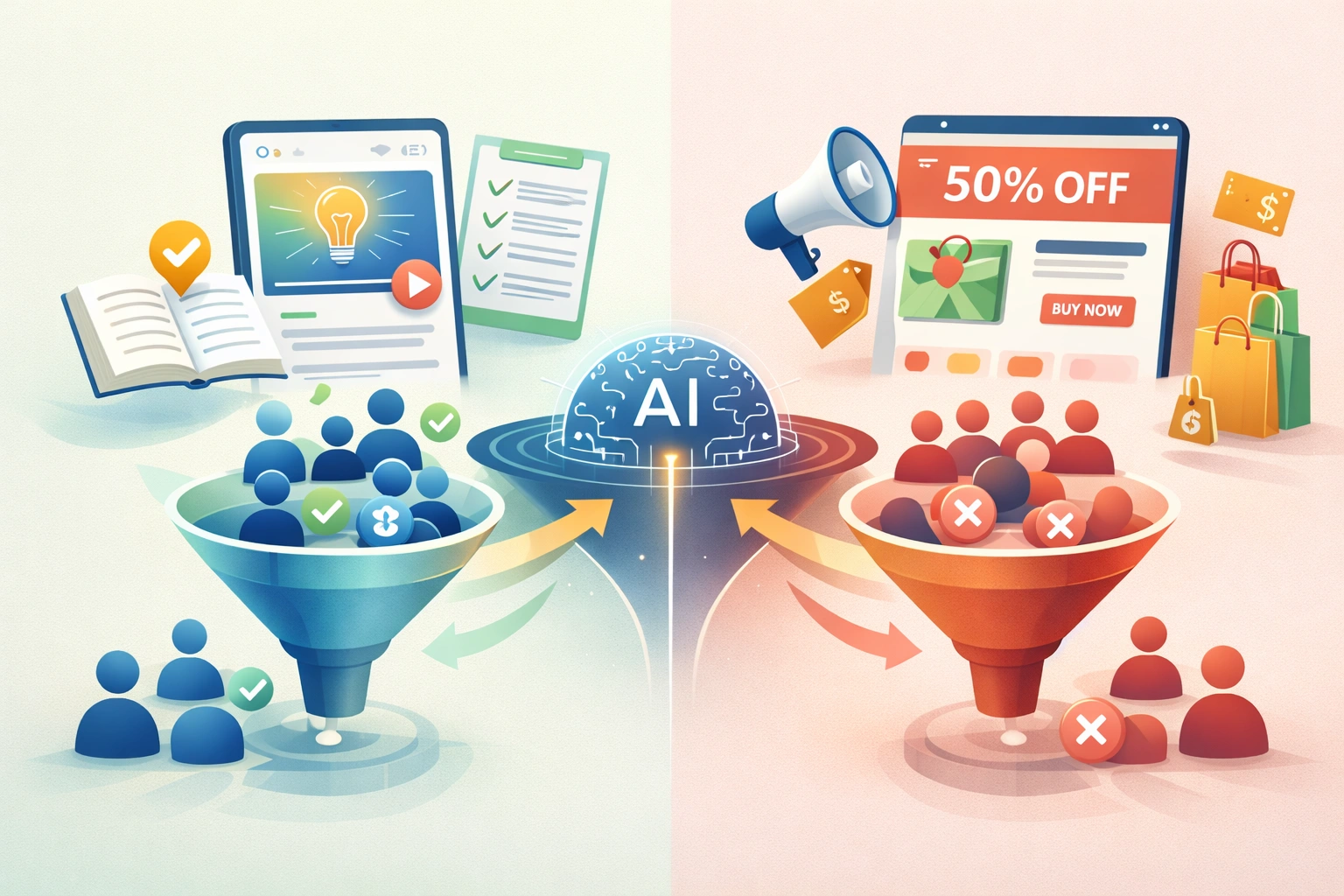
Sales-focused ads often ask for trust before it exists. Educational ads do the opposite. They demonstrate understanding first, which makes later conversion feel natural instead of forced.
When users click on educational content, they arrive with context. They know what they are about to read or watch. This alignment reduces bounce rates and increases meaningful interaction.
From the algorithm’s perspective, this looks like quality traffic, and quality traffic compounds over time.
Why Educational Funnels Scale Better
Educational content creates reusable assets. A well-written article, video, or explainer can support multiple campaigns without feeling repetitive.
Sales pages often burn out quickly. Once the message is familiar, engagement drops. Educational content, when updated and reframed, continues to generate fresh signals.
This makes education-driven funnels more resilient, especially when combined with broad targeting and consistent creative frameworks.
The Long-Term Advantage Creators Have
Creators and educators are naturally suited to this model. They already think in terms of explaining, guiding, and contextualizing ideas.
Instead of fighting the platform with aggressive persuasion, they work with it by offering clarity. Over time, this builds audience familiarity, algorithmic confidence, and account trust.
The result is not just better ad performance, but a stronger relationship with the audience itself.
When Sales Pages Still Make Sense
This does not mean sales pages are obsolete. They work best when placed later in the journey, after education has done its job.
Once trust and understanding exist, direct offers feel appropriate. At that point, the algorithm already has strong signals to guide delivery.
The mistake is not selling. The mistake is selling too early.
The Takeaway
Educational content performs well on Meta Ads because it respects attention, builds trust, and generates the signals the algorithm values most.
Sales pages still matter, but they perform best when they follow understanding rather than replace it.
In the current Meta Ads ecosystem, teaching first is not a compromise. It is a strategy.


