

Meta Ad Account Trust: What It Is and How to Build It Over Time
Most advertisers think about Meta Ads in terms of campaigns, creatives, and audiences. Far fewer think about trust. And yet, trust is one of the quiet forces shaping whether ads deliver smoothly, struggle unpredictably, or never quite stabilize.
Meta does not treat all ad accounts equally. Over time, the platform forms an internal understanding of how reliable, consistent, and user-friendly each account is. That understanding influences how quickly campaigns learn, how stable delivery becomes, and how forgiving the system is when something changes.
This is not written anywhere in Ads Manager, but it is felt by anyone who has run enough campaigns to notice the difference.
What “Ad Account Trust” Really Means
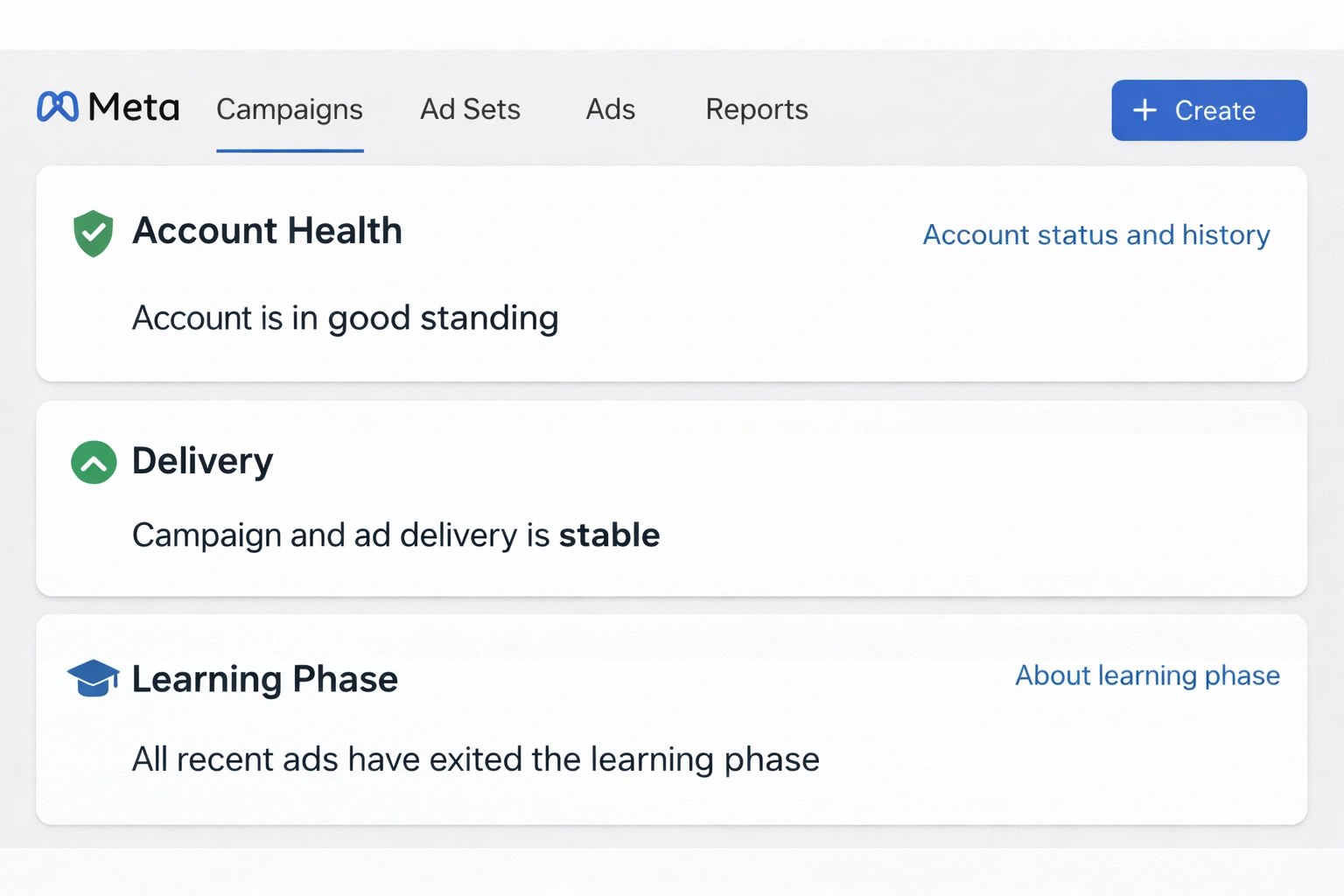
Ad account trust is Meta’s internal confidence in how your account behaves. It is not a single score, and it is not something you can see directly. Instead, it emerges from patterns across time, campaigns, and user interactions.
Meta observes whether your ads consistently comply with policies, whether performance patterns are stable, and whether users respond positively or dismiss ads quickly. Each campaign contributes small signals that accumulate into a broader reputation.
This is part of the same system where Meta Ads now prioritize signals over targeting, using behavioral data to inform delivery decisions at every level.
Why Trust Affects Performance More Than People Realize
Accounts with higher trust tend to experience smoother learning phases. Campaigns stabilize faster, delivery is more consistent, and performance fluctuations are less extreme.
Lower-trust accounts often feel unpredictable. Learning phases reset frequently. Performance swings sharply. Small changes can cause outsized disruptions.
This is not punishment. It is risk management. Meta’s system is more cautious when it lacks confidence in how an account behaves.
How Trust Is Built Over Time
Trust is built through consistency. Accounts that follow policies, maintain stable spend patterns, and avoid extreme volatility give the system clear data to learn from.
Consistent messaging also matters. When ads, landing pages, and user experience align, engagement signals are cleaner. Users behave predictably, which increases algorithmic confidence.
Trust grows slowly but compounds. Each campaign that behaves well adds to the account’s history, making future campaigns easier to optimize.
What Erodes Ad Account Trust
Trust is fragile. Frequent policy violations, misleading creatives, and sudden changes in direction all introduce uncertainty into the system.
Rapid budget spikes followed by sharp drops can also destabilize learning. Constantly deleting and recreating campaigns resets historical context and prevents long-term pattern recognition.
Even well-intentioned experimentation can cause problems if it lacks structure. The issue is not testing itself, but erratic testing without continuity.
Why New Accounts Feel Harder to Scale
New ad accounts often feel more difficult because they have no history. The system has no context to rely on, so it behaves cautiously.
This is why early campaigns can feel slow or inconsistent. The algorithm is gathering information, not judging performance.
Understanding this helps set realistic expectations. Early success comes from patience, clarity, and gradual scaling rather than aggressive optimization.
Practical Ways to Build Trust Intentionally
Start with simple, compliant campaigns and let them run long enough to generate stable signals. Avoid frequent resets unless something is clearly broken.
Scale gradually. Small, consistent increases in budget are easier for the system to absorb than sudden jumps.
Most importantly, respect the user experience. Ads that feel honest, relevant, and aligned with the landing page generate the kind of engagement that builds trust naturally.
The Long View
Ad account trust is not about winning a single campaign. It is about creating an environment where campaigns can succeed repeatedly.
When trust is strong, optimization feels easier. When trust is weak, even good ideas struggle to gain traction.
In modern Meta Ads, performance is not just about what you run. It is about how you have run things over time.
The Takeaway
If Meta Ads feel inconsistent, the answer may not be in your targeting or creative alone. It may be in the history your account has built.
Focus on consistency, clarity, and user experience. Let campaigns learn. Allow trust to accumulate.
Over time, the system will respond in kind.
